
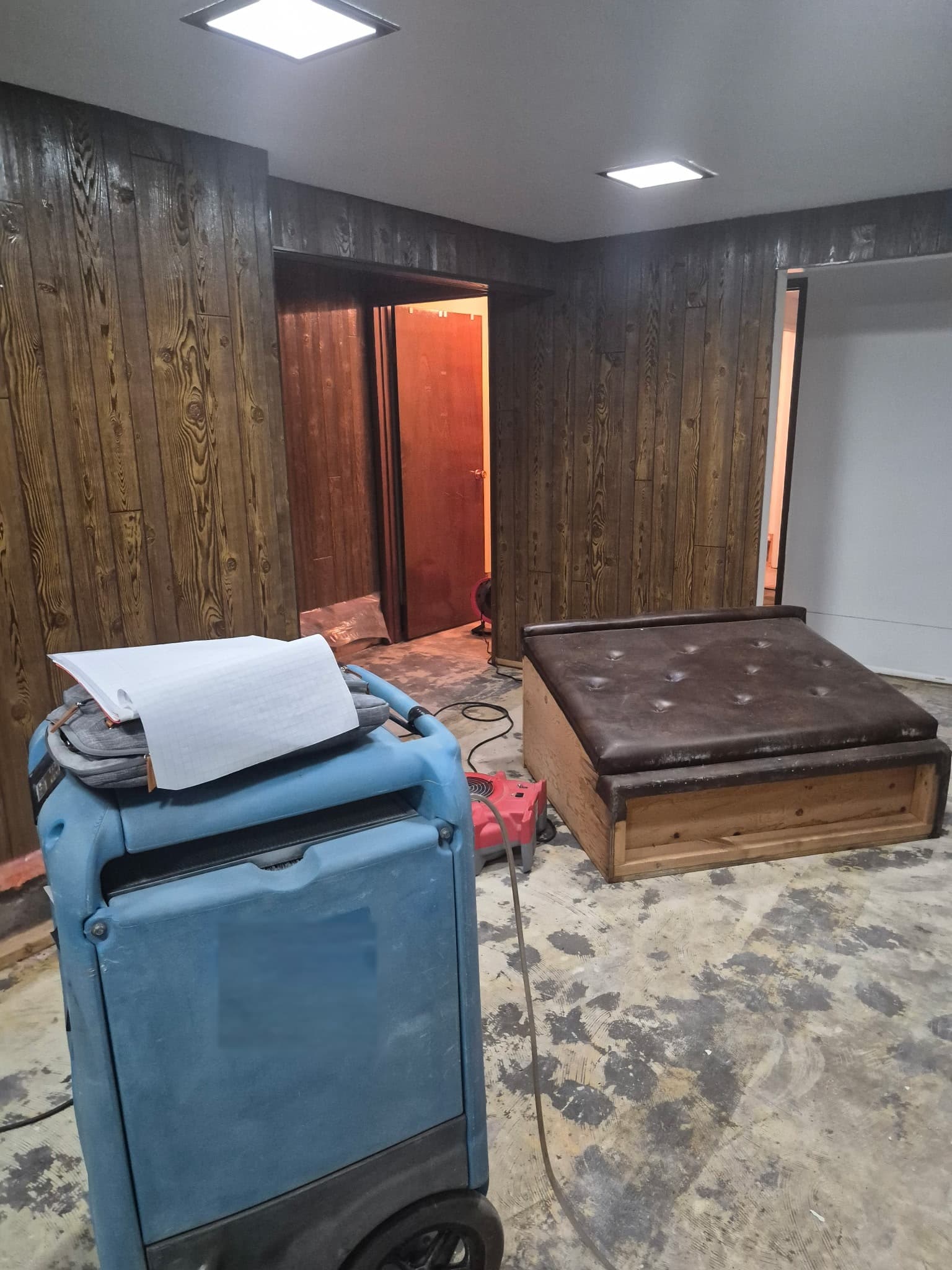
Structural Drying & Dehumidification
Targeted drying for the moisture that remains after visible water is already gone.
Response
Often starts immediately after extraction or after a delayed leak is discovered.
Overview
What this service covers
Once standing water is removed, the deeper job is drying what you cannot easily see. We monitor framing, drywall, insulation, and subfloors so recovery is not rushed.
Commercial dehumidifiers and air movers
Moisture tracking
Daily equipment adjustments
Drying records for insurance files
Final verification before equipment removal
What's included
Usually part of the job
- Moisture-driven equipment placement instead of relying on appearance alone.
- Readings, equipment adjustments, and follow-up checks during the drying phase.
- Final verification before the drying setup is removed.
Not included in initial visit
- Assuming a room is finished drying just because surfaces feel dry.
- Skipping monitoring on assemblies that still show elevated moisture readings.
- Cosmetic repair work beyond the drying scope unless arranged separately.
Common questions
What homeowners usually ask
Why is drying still needed if the room looks dry?
Finished surfaces can dry faster than the structure behind them. Readings help confirm whether framing, cavities, or subfloors are still holding moisture.
How long does structural drying usually take?
It depends on materials, airflow, temperature, and how long the water sat. Many jobs run for several days, with monitoring in between rather than one fixed timeline.
Project Example
Hidden subfloor moisture after a small kitchen leak
St. Albert
The visible water looked limited, but readings showed moisture had moved beneath adjacent flooring. Drying focused on the concealed spread so the issue did not return later.
How it starts
First steps on every job
- 1Moisture mapping
- 2Equipment placement
- 3Daily monitoring
- 4Adjustments
- 5Final verification