
Mold Removal & Remediation in Edmonton
Practical mold remediation that starts with the moisture source, not just the visible growth.
Response
Best when addressed early, especially after unresolved leaks or unfinished drying.
IICRC certified
Water Restoration Technician (WRT)
WCB covered
Workers' Compensation Board of Alberta
$2M liability insured
Commercial general liability
24/7 response
Emergency calls answered day and night
Overview
What this service covers
We help identify where the moisture problem began, contain affected zones, remove damaged materials when needed, and support a cleaner path toward repair.
Moisture-source review
Containment planning
Selective material removal
Cleanup and disposal planning
Post-remediation guidance
What's included
Usually part of the job
- A review of the moisture source so the cleanup plan is tied to the actual cause.
- Containment and selective removal planning based on what is affected.
- Clear guidance on the separation between remediation and later repair work.
Not included in initial visit
- Simply wiping visible growth and calling the issue resolved.
- Rebuild finishes, paint, or cabinetry replacement as part of remediation alone.
- Ignoring unresolved moisture conditions behind the affected area.
Containment
Why proper containment matters
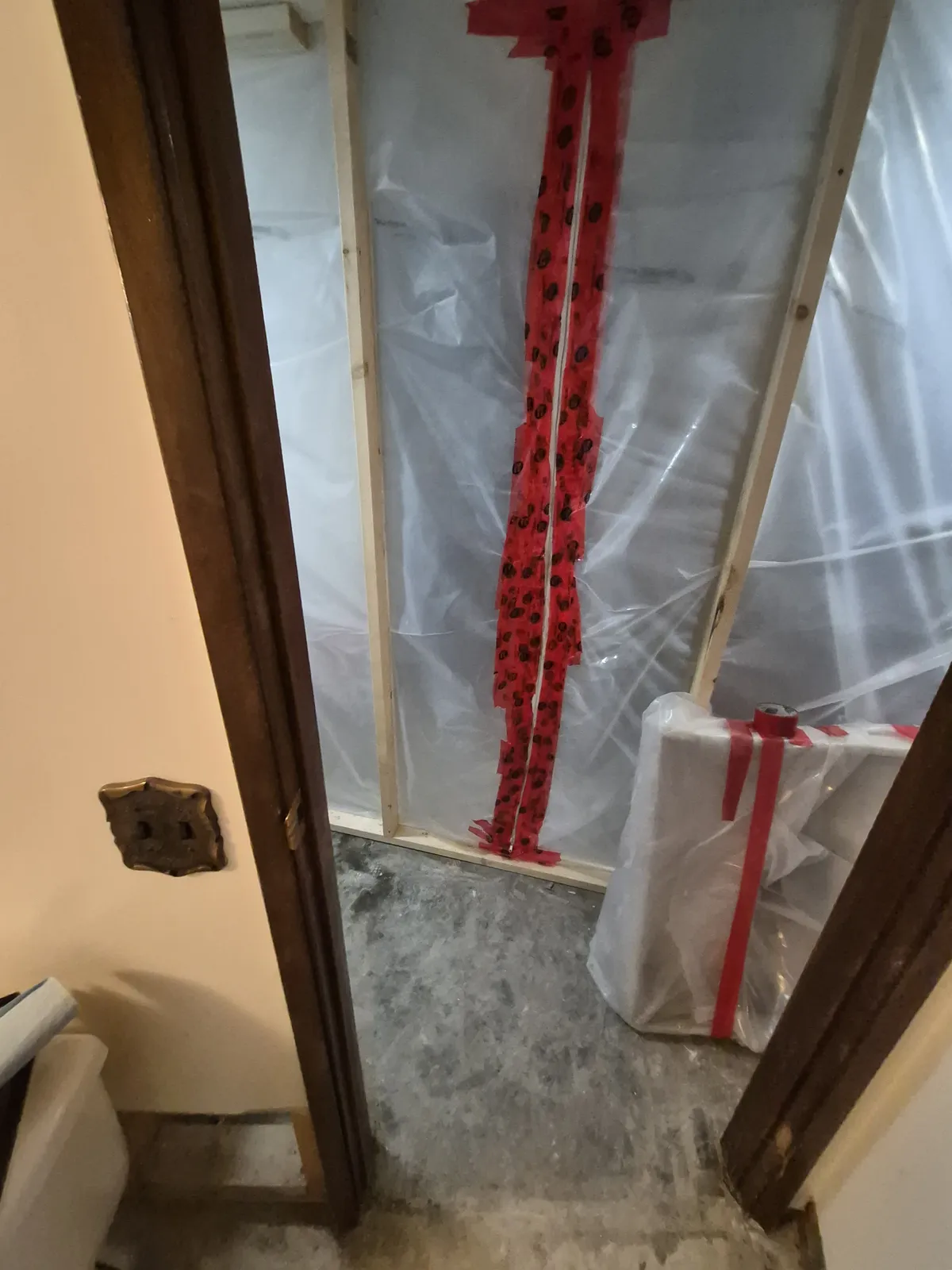
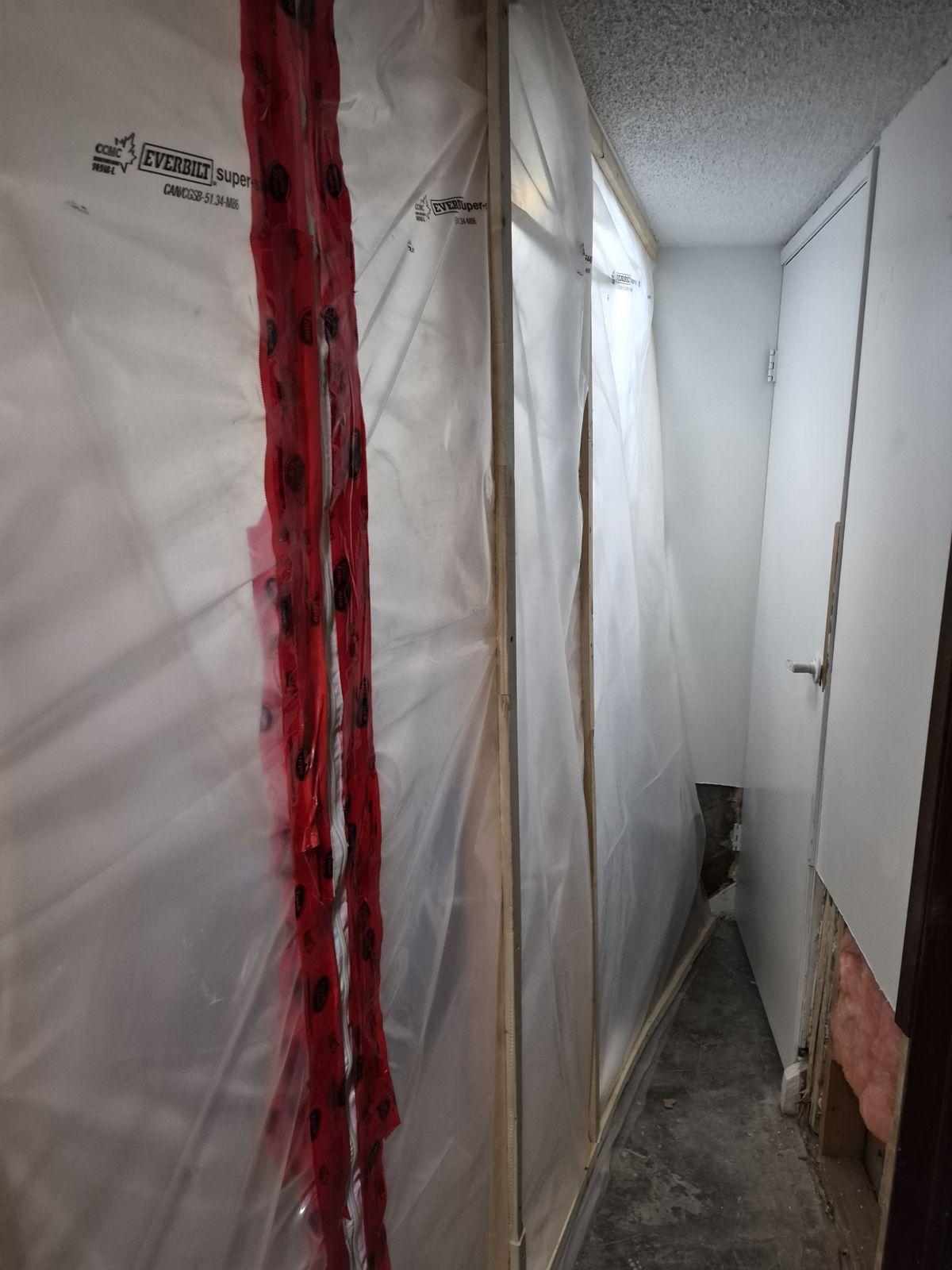
Mold spores travel on dust and air movement. Cutting out mold-damaged drywall or flooring without sealing the area first can carry spores into rooms that were never affected.
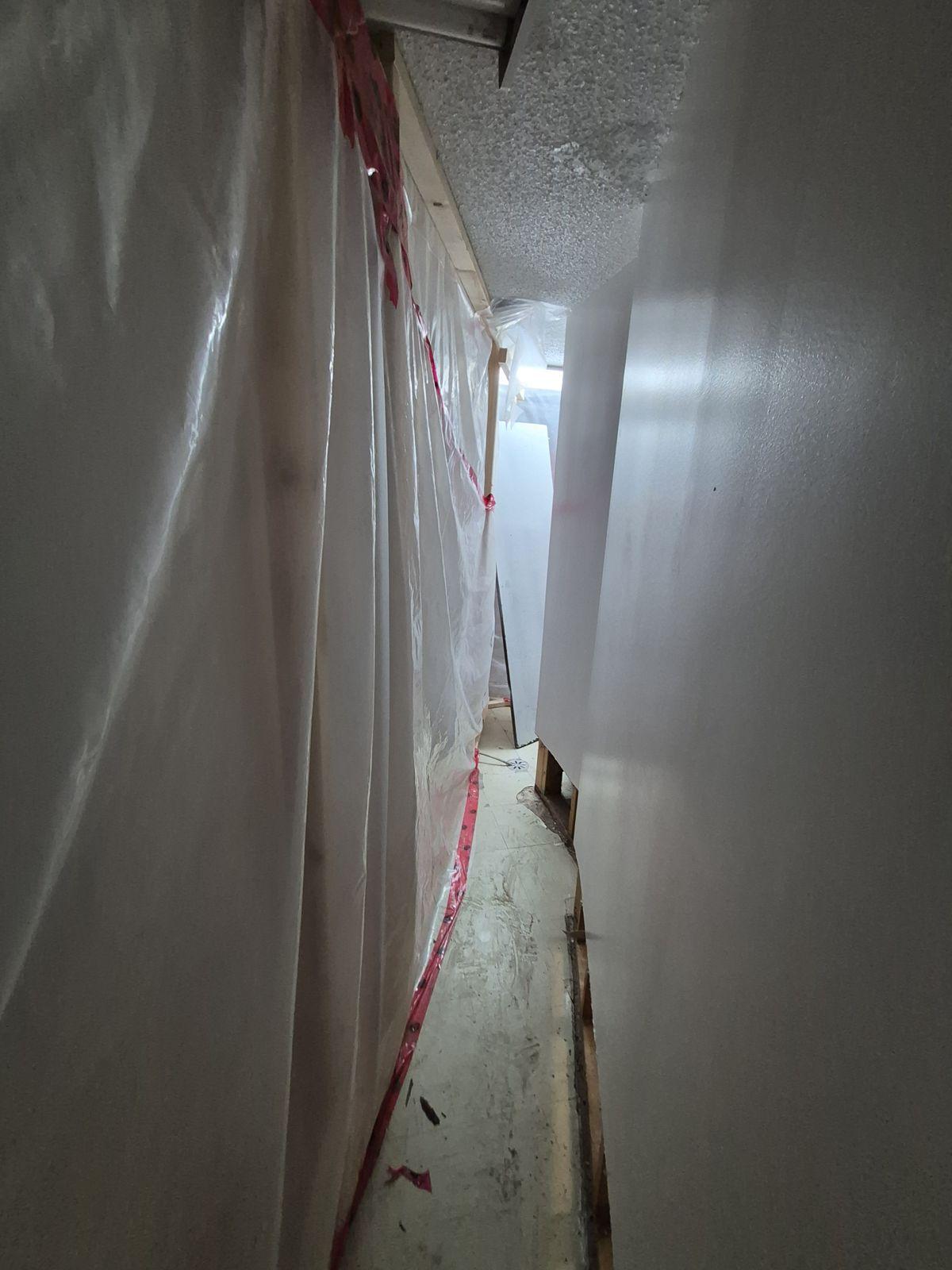
Before removal starts, the work area is closed off with plastic sheeting, taped seams, and a zippered entry, like the setups shown here, so the cleanup stays inside the space that needs it.
Common questions
What homeowners usually ask
Do you just clean the visible mold?
No. The visible growth matters, but the source of moisture matters more. Remediation is most effective when both the cause and the affected materials are addressed.
Should I wait and see if the smell goes away?
Persistent musty smells after a leak or humidity issue are worth checking. Waiting can let the affected area expand behind finished surfaces.
How quickly can mold start after water damage?
Mold can begin growing within about 24 to 48 hours when moisture remains trapped in the structure.
How do I know if hidden mold may be present?
Warning signs can include musty odours, staining, swelling materials, repeated moisture issues, or symptoms that seem worse in a specific part of the home.
Do all wet areas automatically need mold remediation?
Not always. If the issue is addressed quickly and materials dry properly, full mold remediation may not be needed. The decision depends on what is found on site.
Why do you seal off the room before removing mold?
Disturbing mold releases spores. Containment with plastic sheeting and sealed seams keeps them inside the work area instead of spreading through the rest of the home.
Project Example
Bathroom wall remediation after a long-running hidden leak
Sherwood Park
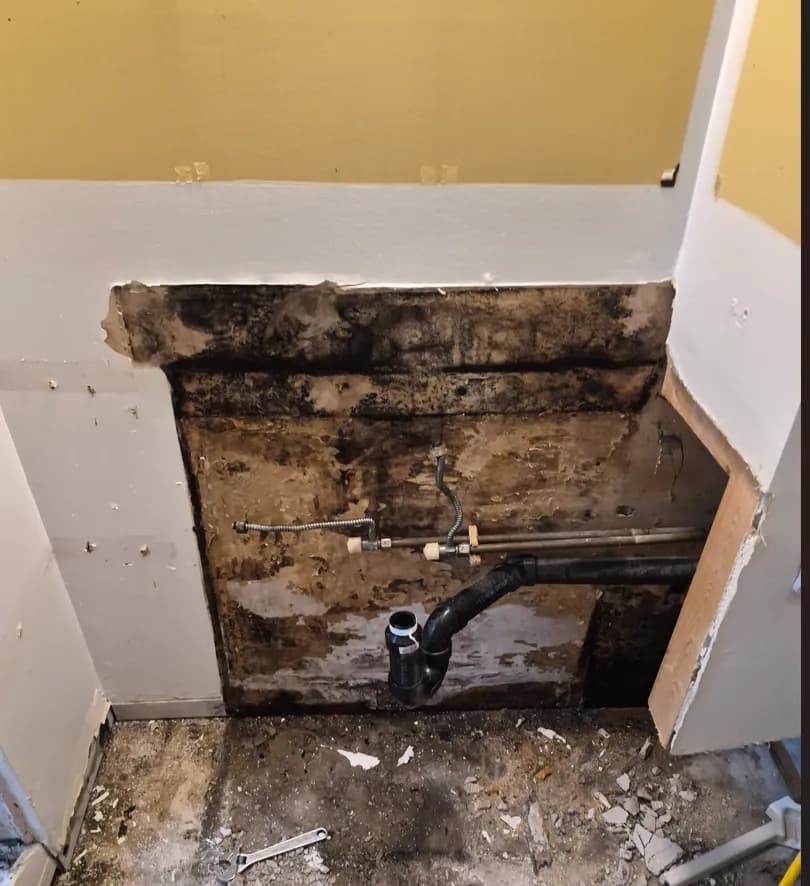
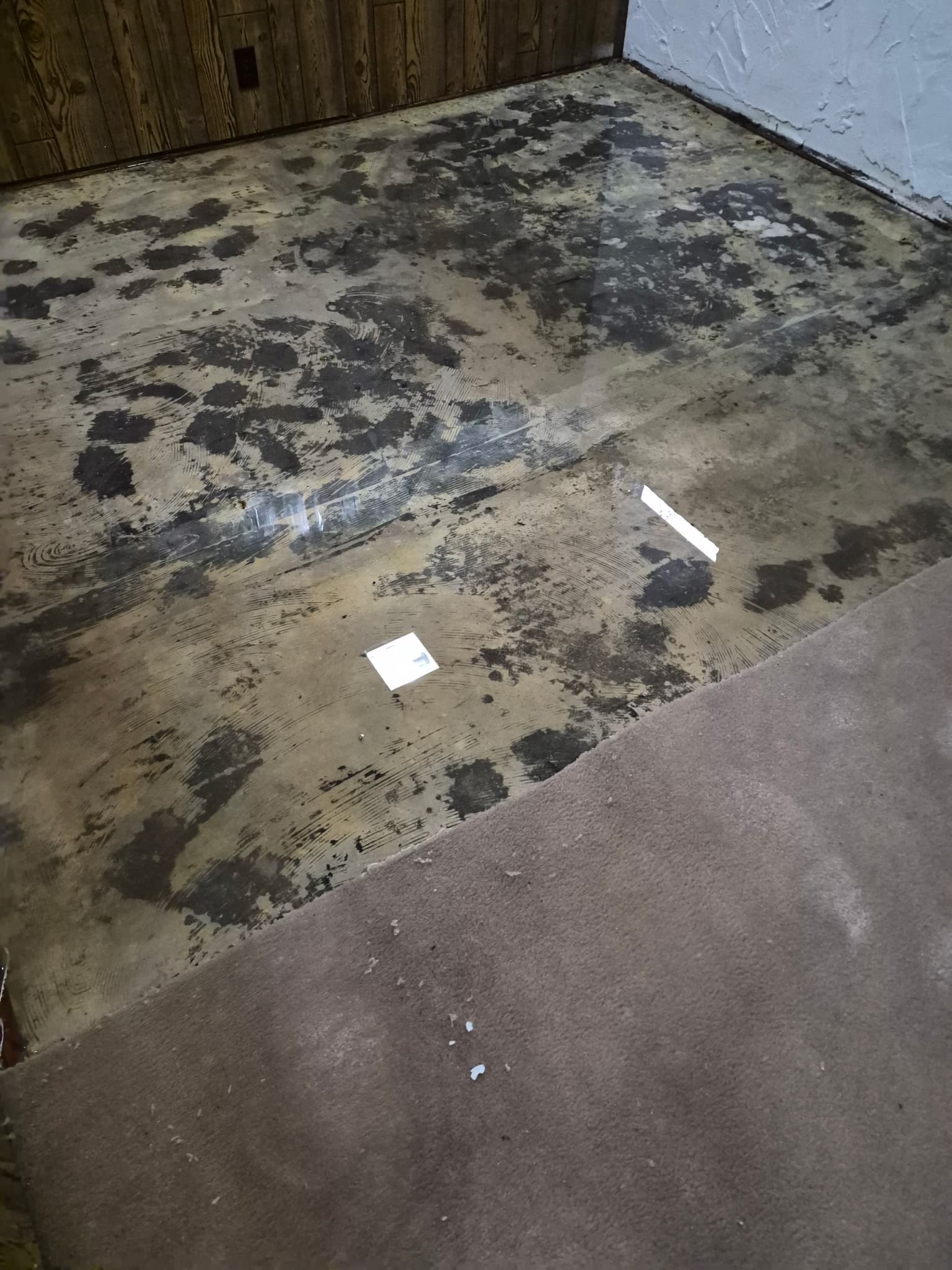
What first looked like paint damage turned into a moisture-source issue behind the vanity wall. The work focused on controlled removal, cleanup, and clarifying the rebuild scope.
How it starts
First steps on every job
- 1Assessment
- 2Containment
- 3Selective removal
- 4Cleanup
- 5Next-step guidance
Areas served
Mold Removal & Remediation across Edmonton and nearby communities
- Edmonton
- Sherwood Park
- St. Albert
- Spruce Grove
- Beaumont
- Leduc
- Stony Plain
- Fort Saskatchewan